
Invoice vs Statement: What’s the Difference?
Learn when to send an invoice versus a customer statement, how their balances differ, and why a statement should not duplicate the underlying charges.
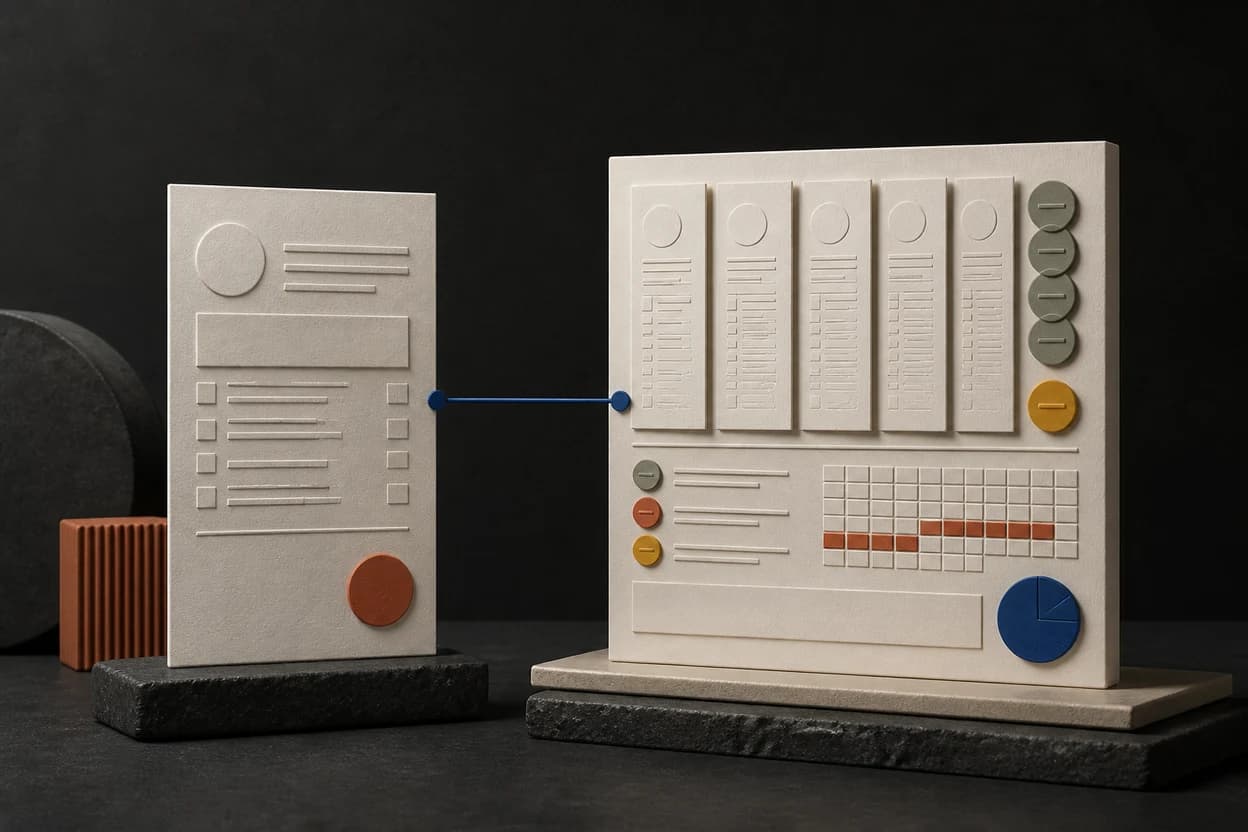
An invoice asks a customer to pay for a specific transaction, period, or milestone. A statement summarizes activity and balances across the customer account. Sending one does not automatically replace the other.
Use an invoice when a new amount becomes payable. Use a statement when the customer needs a consolidated view of invoices, payments, credits, adjustments, and the balance remaining over a period. The invoice is the source payment request; the statement is an account summary built from those source records.
Invoice vs statement at a glance
| Question | Invoice | Statement |
|---|---|---|
| Main purpose | Request payment for a transaction or billing period | Summarize account activity and balances |
| Typical scope | One invoice number and its line items | Multiple invoices, payments, credits, and adjustments |
| When sent | When goods, services, or a milestone become billable | On a cycle or when account clarification is needed |
| Amount shown | Original amount and amount currently due | Opening balance, period activity, and closing balance |
| Payment terms | Usually states a due date or terms | Usually repeats due dates and balances from source invoices |
| Can it replace the other? | No; it does not summarize the full account | Usually no; it should not create a new charge by itself |
Oracle's customer statement guidance describes a statement as a complete record of invoice, receipt, credit, debit, chargeback, and adjustment activity for a specified period. Small businesses can use a simpler layout, but the distinction remains: a statement consolidates activity that originated elsewhere.
Once those source balances are correct, the accounts receivable aging guide explains how to group the remaining open amounts by time.
What an invoice does
An invoice is a numbered commercial document. It normally includes:
- Seller and customer details
- Invoice number
- Issue date and due date
- Goods, services, or billing period
- Subtotal, tax, credits, and total
- Currency and payment instructions
An invoice can be open, overdue, partly paid, paid, or cancelled. Its status follows the balance on that specific document.
What a customer statement does
A statement gives the customer an account-level view, often for a calendar month. It may include:
- Opening balance
- Invoice numbers and dates
- Payments received
- Credit notes or adjustments
- Amount still due on each open invoice
- Closing balance
- Aging columns or due dates
A statement should have a clear statement date or as-of date. Without one, the customer cannot tell whether a recent payment was omitted because it arrived after the cutoff or because it was not applied correctly.
A worked invoice and statement example
Suppose a client has this August activity:
| Date | Reference | Activity | Account effect |
|---|---|---|---|
| Aug 1 | INV-410 | Monthly support invoice | +$1,200 |
| Aug 8 | PAY-882 | Payment for INV-410 | -$1,200 |
| Aug 18 | INV-427 | Implementation milestone invoice | +$2,500 |
| Aug 24 | CR-019 | Approved service credit | -$250 |
INV-427 is the payment request for $2,500. After the $250 credit, the statement dated August 31 shows a closing balance of $2,250.
The statement does not need a new invoice number or another $2,250 revenue entry. It summarizes the existing invoice and credit. Creating a second invoice for the statement balance would duplicate the charge.
When to send an invoice
Send an invoice when:
- You delivered goods or services that are now billable
- A project milestone reached its payment trigger
- A recurring service period begins or ends under the agreement
- A deposit or final balance becomes due
- A valid adjustment must be documented through the required invoice process
The how to send an invoice guide covers recipient checks, subject lines, attachments, live links, and delivery records.
When to send a statement
A statement is useful when:
- A customer has several invoices open at once
- Payments and credits need to be shown together
- The customer asks for its current account balance
- You run a monthly accounts receivable review
- A payer sent one transfer covering multiple invoices
- The customer and seller disagree about which invoice remains open
A statement can make a reminder easier to understand, but it should not hide the source documents. Keep each invoice number visible so the payer can trace and allocate the balance.
Statement vs overdue invoice reminder
A statement is neutral account information. An overdue reminder asks for a specific action by a specific date.
If only one invoice is late, resend that invoice with a concise overdue invoice reminder. If several invoices are open, attach or include a statement and still name which items are overdue.
For example:
Attached is your statement as of August 31. It shows two open invoices totaling $3,400. INV-391 for $900 was due August 15; INV-427 for $2,500 is due September 10. Please confirm the payment date for INV-391.
The message separates the overdue amount from the amount that is still within terms.
Statement balance vs invoice balance
An invoice balance belongs to one invoice. A statement balance combines account activity through its cutoff date.
They may differ because:
- The customer has more than one open invoice
- A credit applies at account level
- A payment arrived but has not been allocated
- The statement excludes activity after its as-of date
- One invoice is disputed while others remain payable
- Currency balances are reported separately
Do not force the figures to agree by editing an issued invoice. Reconcile the payment and adjustment records first. The invoice reconciliation guide provides a step-by-step process.
Does a statement need a due date?
The source invoices should carry their own due dates. A statement may repeat those dates and can show a total due, but giving the statement a new due date can create ambiguity.
If an invoice was due August 15, a statement dated August 31 should not silently move that obligation to September 15. Any revised payment schedule should be agreed and documented separately.
Can a statement be used as proof of payment?
A statement can show that an account was credited or has a zero balance, but it is not always sufficient proof that a particular payment settled. Keep the bank or processor record and the paid invoice or receipt where applicable.
The IRS business record guidance lists account statements, invoices, receipts, and proof of payment among supporting documents. One document may not substantiate every part of a transaction.
Common invoice and statement mistakes
Re-invoicing the statement total
This duplicates charges already represented by the underlying invoices. Send the statement as a summary, not a new sale.
Showing one total with no references
Customers need invoice numbers, dates, original amounts, payments, credits, and remaining balances to reconcile their own records.
Mixing current and overdue balances
Label each invoice by due date or aging bucket. Do not chase an entire statement balance when part of it is not yet due.
Hiding unapplied payments
If money arrived without a clear invoice reference, show it as unapplied or resolve the allocation before sending the statement. Do not pretend it did not arrive.
Treating a statement as delivery of a new invoice
Send each invoice through the agreed channel when it is issued. A later statement may support collection, but it should not be the customer's first notice of a charge.
A statement review checklist
Before sending a statement, confirm:
- The customer entity and account are correct.
- The statement date and activity period are explicit.
- Invoice numbers and due dates match the source documents.
- Settled payments are posted through the cutoff.
- Credits and adjustments are authorized and traceable.
- Current and overdue balances are separated.
- The closing balance adds up.
- Any disputed amount is labeled and handled through the agreed process.
Disclosure: NeatInvoice publishes this comparison. NeatInvoice does not process payments. It creates and tracks individual invoices; it is not a full accounting ledger and does not generate consolidated customer statements. Use your reconciled invoice records with your bookkeeping system when a formal account statement is required.
Frequently asked questions
What is the difference between an invoice and a statement?
Can a statement replace an invoice?
When should I send a customer statement?
Does a statement need a new due date?
Is an invoice statement the same as an overdue reminder?
Sources and related guidance
References used to support this page in . Rules and product details can change; check the linked source for current, jurisdiction-specific information.
- How You Implement Customer Statements by Oracle
- What kind of records should I keep? by Internal Revenue Service