
Sales Invoice: What It Is, What to Include, and When to Send It
A practical guide to sales invoices: what they request, what to include, how they differ from receipts and purchase orders, and how to keep records clear.
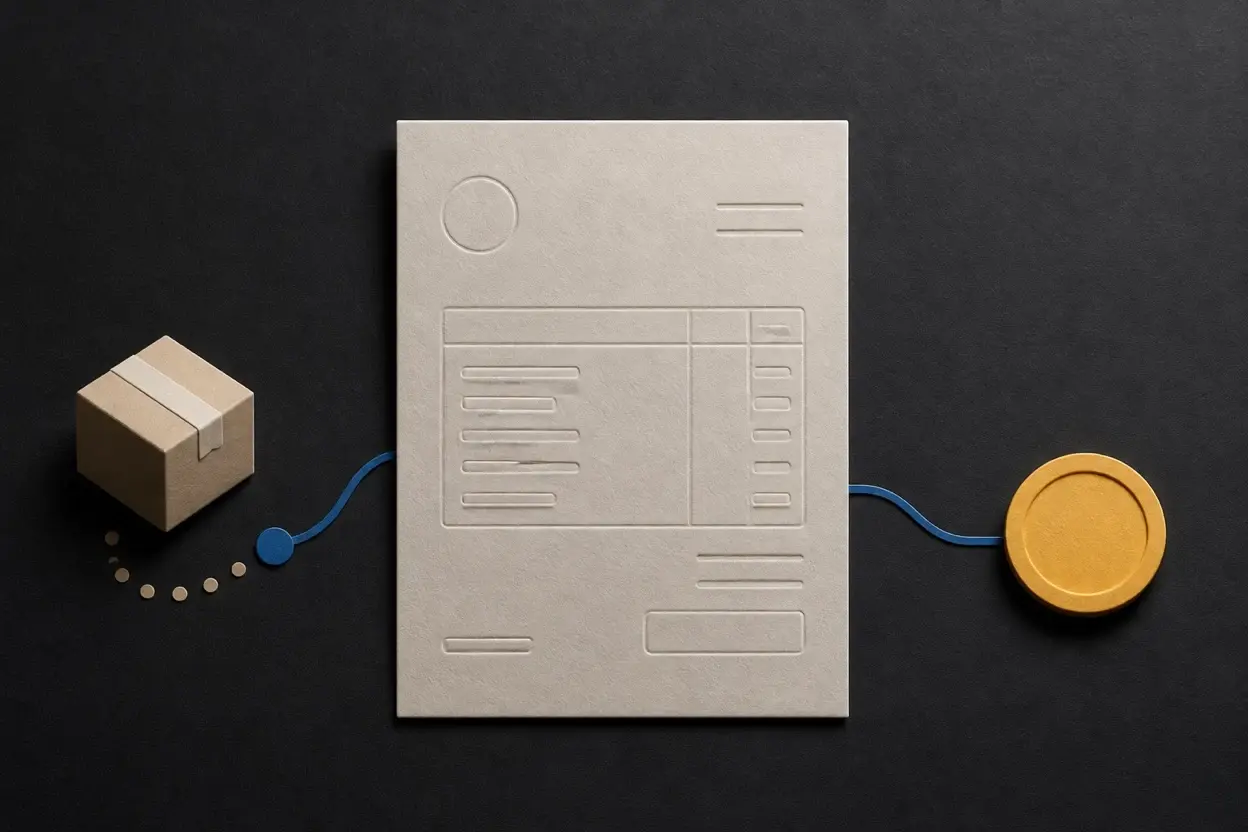
A sales invoice is the seller's formal record of a sale or billable supply. It describes what the customer is being charged for, states the amount due under the agreed terms, and gives the buyer enough information to approve and pay it.
A sales invoice requests payment for an actual or billable supply. It is not a quote, purchase order, proforma preview, or receipt. Those documents can sit in the same transaction, but each answers a different question.
The Australian Government's invoicing guidance describes an invoice as a document that tells the customer how much they owe, when to pay, and how to pay. In its order-to-cash guidance, HM Revenue & Customs calls a sales invoice a key accounting and VAT document. The tax label and required fields still depend on where the business is registered and what it sold.
Sales invoice at a glance
| Document | Created by | Main question | Payment meaning |
|---|---|---|---|
| Quote or estimate | Seller | What might this work cost? | Proposal, not a final payment request |
| Purchase order | Buyer | What purchase is authorized? | Authorization, not proof of payment |
| Sales invoice | Seller | What is due for the supply? | Formal payment request |
| Proforma invoice | Seller | What would the sale look like? | Usually a preliminary document |
| Receipt or paid record | Seller or payment system | What was received? | Evidence of payment after settlement |
In a small business, this document can be called simply an invoice. The adjective matters when you need to distinguish the seller's document from a buyer's purchase record, a purchase order, or a proforma invoice used before the formal sale.
What the invoice should include
Use a practical baseline, then add the fields required by your jurisdiction, customer, contract, and tax registration:
- Seller identity: business or legal name, contact details, and registration details where required.
- Customer identity: the correct person or business, bill-to details, and any customer account reference.
- Invoice identity: a unique invoice number and issue date. Use a sequence that makes duplicates easy to spot.
- Supply details: a clear description of each good or service, quantity or hours, rate, service period, delivery date, or milestone where relevant.
- Amount: currency, line totals, discounts, shipping, taxes where applicable, and the final amount due.
- Payment terms: due date, accepted payment method, payment instructions, and any agreed reference such as a purchase-order number.
The Australian Taxation Office guidance reproduced in business.gov.au's invoice checklist shows why tax invoices need additional fields for registered businesses. Do not copy another country's tax labels into your invoice without checking the rules that apply to your business.
A traceable invoicing workflow
Scope agreed
Confirm the customer, price, terms, and any required purchase order
Supply completed
Deliver the goods, service period, or approved milestone
Invoice issued
Send the numbered invoice with the amount and due date
Approval and follow-up
Answer questions, track status, and remind when the terms allow
Payment recorded
Verify settlement, apply the amount, and keep any receipt or remittance detail
The sequence is not identical for every contract. A deposit, recurring service, milestone, or self-billing arrangement can change when the document is issued and who prepares it. The underlying discipline remains: connect the invoice to the agreement, supply evidence, payment terms, and eventual settlement.
Worked example: consulting work
A consultant completes ten hours of research at $150 per hour. The engagement uses a 15-day term and does not require a purchase order.
The invoice could show:
| Field | Example |
|---|---|
| Invoice number | INV-2048 |
| Description | Research and advisory support — 10 hours |
| Quantity and rate | 10 hours × $150 |
| Subtotal | $1,500 |
| Payment terms | Due 15 days after issue |
| Payment instruction | Bank transfer or the configured payment link |
The document requests $1,500. It does not say that the client has approved the work or that the money has arrived. If the client disputes two hours, keep the original invoice and document the agreed correction instead of changing the history without a trace.
Invoice versus a purchase order
A buyer may issue a purchase order before the seller delivers anything. The PO describes the authorized purchase; the invoice comes from the seller when the agreed goods, services, installment, or milestone becomes billable.
The two documents can share a reference number, but they should not be treated as the same record. Read the invoice versus purchase order guide when a customer's accounts-payable process requires a PO before it will approve your invoice.
Invoice versus a proforma invoice
A proforma invoice is usually a preliminary, invoice-shaped document. It can help a buyer review scope, arrange funds, or prepare shipping paperwork, but it is normally not the formal accounts-receivable request for an already supplied service or product.
When the customer has accepted the terms and you need to collect a deposit or final balance, issue the document that your agreement and local rules require. The proforma invoice guide explains why a preview should be labeled clearly and kept separate from a payable invoice.
Invoice versus a receipt
The invoice tells the customer what is due. A receipt or paid record shows what the seller received after the sale. The Australian Government receipt guidance notes that the same document can serve both roles in some retail or online sales when payment happens immediately, but the purposes remain different.
For credit sales, issue the invoice first. After the payment settles, keep the payment evidence and provide a receipt or payment confirmation when the customer or local rules require one.
Before you send the invoice
Run this short check before sending a PDF or live link:
- Confirm the buyer's legal or trading name and bill-to address.
- Check the invoice number is unique and follows your sequence.
- Match the description, quantity, rate, and total to the agreement or approved milestone.
- Apply the correct currency, tax treatment, discount, and shipping logic for your situation.
- Add the due date and payment instructions in a place the customer can find quickly.
- Include the customer's purchase-order or project reference when required.
- Confirm the delivery channel: accounts-payable portal, PDF email, live link, or more than one.
- Save the issued copy and the supporting agreement before follow-up begins.
An accounts-payable team may reject an otherwise accurate invoice because the supplier name, reference, or submission channel is wrong. That is a workflow failure, not necessarily a payment refusal. Fix the specific missing requirement and keep the original trail.
Correcting an issued invoice
If the amount, customer, tax treatment, or description is wrong, do not silently overwrite the only copy. The correction method depends on the jurisdiction and the reason for the change. It may involve a credit note, replacement invoice, debit note, or a documented cancellation and reissue.
HMRC's order-to-cash guidance describes credit and debit notes as controlled adjustments to an invoice in the UK VAT context. That is a jurisdiction-specific example, not a universal procedure. Preserve the original, state what changed, and use the correction document required for your business.
Keeping the record complete
Keep the invoice with the quote or agreement, purchase order if there is one, delivery or service evidence, remittance advice, payment record, credit notes, and material customer correspondence. The IRS recordkeeping manual describes issued invoices as source records for sales-journal entries, while the IRS's broader recordkeeping guidance lists invoices and payment documents among supporting business records.
Retention periods and tax evidence rules vary. Use this as an operational structure, then confirm the requirements for the country and registration that own the sale.
How NeatInvoice fits
NeatInvoice publishes this educational guide; it is not an independent review of document systems. The workspace gives independent professionals a focused way to create an invoice, share a live link or PDF, see when a live link was viewed, and keep status, due dates, reminders, and payment details together. NeatInvoice does not process payments or decide that a customer approved the work just because an invoice was viewed.
This invoice is the start of a traceable payment request. Keep the issued document, client reference, delivery or service evidence, and later payment record connected so a question can be answered without rebuilding the transaction.
Frequently asked questions
What is a sales invoice?
What is the difference between a sales invoice and a purchase invoice?
What should a sales invoice include?
Is a sales invoice the same as a receipt?
What is the difference between a sales invoice and a proforma invoice?
Can I issue a sales invoice before delivery?
How should I keep sales invoices?
Sources and related guidance
References used to support this page in . Rules and product details can change; check the linked source for current, jurisdiction-specific information.
- How to invoice by Australian Government business.gov.au
- Order to cash (part 3) by HM Revenue & Customs
- Record keeping (VAT Notice 700/21) by HM Revenue & Customs
- 4.10.3 Examination Techniques by Internal Revenue Service